Alcohol kills 17,000 Ugandans each year – 47 people each day. And you are not bothered, are you?

- Vicent Nemeyimana
- November 24, 2026
- Health and Lifestyle
Every single day in Uganda, an average of 47 people die from causes directly linked to alcohol. That adds up to more than 17,000 lives lost every year, the equivalent of wiping out an entire town annually, mostly in silence. In addition, through its toll on socioeconomic fabric of the society, it causes financial losses of 11 trillion Uganda shillings each year. Yet, across bars, trading centers, sports events, and parliamentary corridors, life goes on with a collective shrug.
This sobering reality comes from a November 2026 national assessment released ahead of the fifth annual alcohol policy conference in Kampala. Compiled by specialists from Makerere University, Mbarara University, and the Uganda Cancer Institute for the Uganda Alcohol Policy Alliance, the study paints a stark picture of a country drinking itself into a public health and economic emergency.
Alcohol and its Heavy Toll on Health, Families, and the Economy
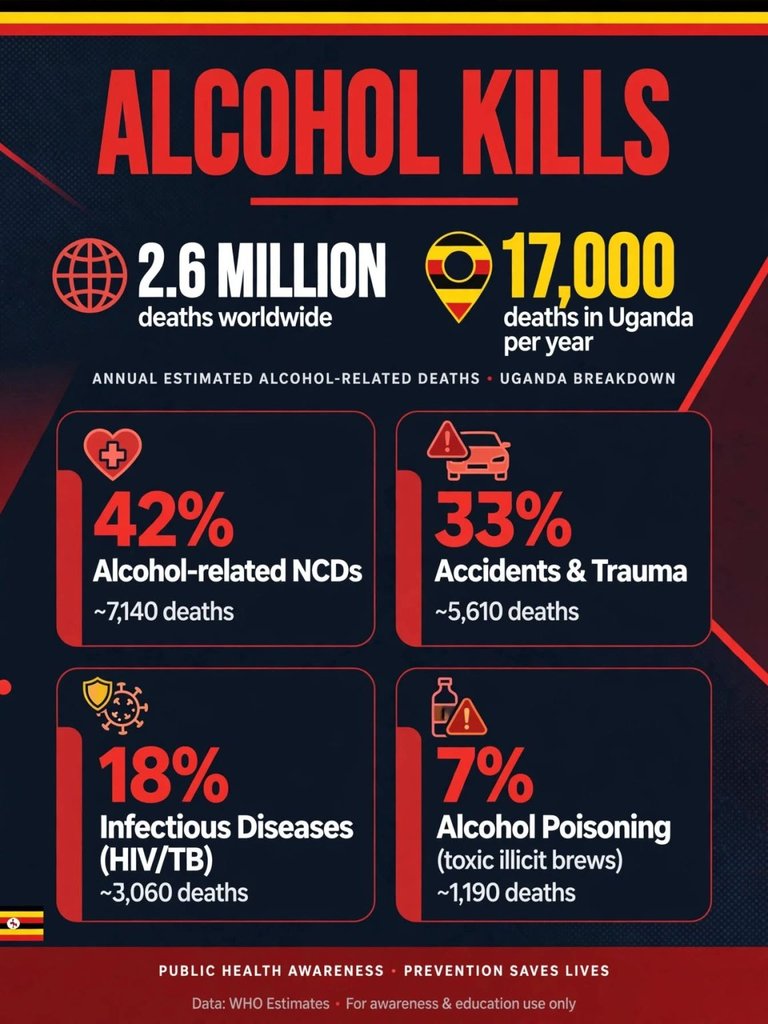
According to the data, Uganda ranks first in Africa and fifth globally in alcohol intake, with citizens aged 15 and older consuming an average of 12.2 liters of pure alcohol each year. About 42% of Ugandans in this age bracket drink, and over half of them (54%) engage in heavy consumption.
The human cost falls heaviest on working-age men. Of the 17,065 annual deaths tied to drinking, roughly 13,684 are men, meaning alcohol drives more than one in ten male fatalities nationwide. Women account for about 3,382 of those deaths, with researchers noting alarmingly high consumption levels among women in the Karamoja sub-region and rising binge drinking among teenagers.
Beyond liver disease and cancers, alcohol fuels road crashes, domestic violence, and mental health struggles, often claiming the lives of innocent bystanders who never took a sip. Meanwhile, 12.4% of Ugandans aged 15 and up live with an alcohol use disorder, nearly double the African regional average.
The financial drain is just as staggering. As reported by NTV Uganda and Daily Monitor, excessive drinking drains roughly Shs 11 trillion (nearly $3 billion) from the economy every year through lost productivity, medical bills, and social harm. That figure rivals major national development budgets, yet public outrage remains muted.
Why Nothing Changes Regarding Alcohol Control
If a contagious outbreak killed 47 citizens a day, emergency task forces would mobilize overnight. With alcohol, however, economic convenience and aggressive marketing cloud the urgency. Important to note is alcohol is a cultural drink. Research shows that anything strongly entangled in people’s culture is hard to uproot! And, yeah, Uganda is struggling with millions other problems!
In August 2024, the Parliament of Uganda rejected a proposed control bill introduced by MP Sarah Opendi that sought to restrict selling hours, ban sales to minors, and tighten oversight. Lawmakers cited potential burdens on the national budget, enforcement hurdles, and fears of hurting businesses and tax revenues, even though the economic losses far outweigh tax collections. Some accused the bill of targeting the only 30% formal sector while neglecting the 70% of the unregistered and unregulated informal local alcohol (read here too).
While government officials, for example, Minister Balaam, issued directives in August 2026 urging local authorities to enforce a 3:00 p.m. weekday opening time for bars, patchwork district rules struggle against cheap, unregulated brews and relentless advertising targeting youth. Most districts do not observe any of these guidelines.
Additionally, the order by Minister Balaam was quickly overrun by another order from the country’s Chief of Defense Forces (CDF), General Muhoozi Kainerugaba, who instructed that Ugandans should drink at whatever time of their choice. In his own words, he said, ‘Opening and closing hours for bars and clubs is up to the proprietors. What we will not tolerate is any form of fighting and violence. Otherwise, Ugandans are entitled to enjoy themselves’ (see here).
Now you know! At this rate, nobody sees alcohol as a dangerous threat to fight!
Alcohol and the world
Worldwide, alcohol kills an estimated 2.6 million people every year, accounting for 4.7% of all global deaths and disproportionately claiming the lives of men (2 million deaths) and young adults aged 20 to 39, according to the World Health Organization (WHO). Economically, alcohol consumption drains roughly 2.6% of global Gross Domestic Product (GDP) annually, averaging about $1,306 in international dollars per adult, with more than 60% of those financial losses driven by reduced workplace productivity and premature deaths, alongside heavy direct expenses for healthcare, criminal justice, and traffic crashes, as detailed in research published via the National Library of Medicine (PMC).
Alcohol and injuries or violence: Generally, alcohol kills people through direct alcohol poisoning and the chronic diseases it causes, including cancers, liver cirrhosis, mental health challenges, and the exercebation of HIV and TB. However, rarely do we look at alcohol and violence or injuries.
According to the World Health Organization (WHO), out of roughly 1.16 million total global road fatalities, about 298,000 deaths are directly attributed to alcohol. More than half of those victims, an estimated 156,000 people, were killed by someone else’s drinking, such as pedestrians, passengers, or sober drivers. Beyond road crashes, alcohol causes hundreds of thousands of additional accidental deaths worldwide each year from falls, drownings, fires, and workplace injuries.
In Uganda, research cited by the Uganda Alcohol Policy Alliance (UAPA) estimates that out of Uganda’s total alcohol-attributable deaths, roughly 3,900 fatalities per year stem from road traffic injuries. According to some authors (read here and here), because roadside breathalyzer enforcement has fluctuated, official Uganda Police Force reports record fewer confirmed drunk-driving deaths, typically logging around 800 deaths across roughly 3,500 alcohol-linked crashes per year.
Alcohol and Our Efforts: Breaking the Indifference
In my view, the war on alcohol should also be personal and communal. Why do I think so? Other than pretending, who surely cannot see the effects of alcohol in our homes and families?
For every family that broke, a marriage that ended in tears, a well-to-do family that ended up poor (or a poor one that became poorer), and a deadly crush that happened on our roads or a violent fight that ended up in hospitalization or death of a family member, yes, higher chances are alcohol is or was part of the mess. In fact, alcohol has more consequences than we can possibly quantify.
As such, it is a person’s responsibility to guard themselves against alcholism and its dangers the same we guard ourselves against diseases. Families should take it upon themselves to protect their children or family members. And communities need to have their own social laws to regulate alcohol in their communities. Otherwise, given the ineffective national policy and action on alcohol, it becomes a personal matter.
Well, on the side of national strategy, health advocates and addiction specialists emphasize that alcohol harm is not merely a private moral failing, but a structural crisis rooted in poverty, unemployment, and weak regulation. Of course, we have a national alcohol policy outlining some preventive and control strategies. However, without an act or a legal instrument, the suggested guidelines remain voluntary. Any, below are some of the strategies:
- Passing comprehensive national legislation that regulates production, hours of sale, and marketing, especially ads tied to sports and youth entertainment. When shall we pass a legal alcohol act?
- Raising excise taxes to curb affordability while funding public health interventions.
- Cracking down on illicit, unrecorded brews, which make up the bulk of consumption in vulnerable communities.
- Expanding addiction treatment and mental health support across regional hospitals.
However, all of the above require heavy investment. And we do not have that luxury in Uganda. So, think about it.
Forty-seven lives lost every day is not an inevitable cost of socializing or doing business. Until citizens and leaders treat these deaths with the urgency they demand, the toll will only keep rising. And until alcohol specifically targets and attacks our own, the ones we love or care about, we may never understand the cost! And yet I ask; does it have to reach that far?