UBUA Hosts the 1st Dr. Emmanuel Niyibigira Iyamulemye Annual Coffee Symposium at Serena Hotel: Here are the Take-aways!

Dr. Emmanuel Niyibigira Iyamulemye was the Managing Director (MD) at the Uganda Coffee Development Authority (UCDA) from 2016 until his time of death on 18th November 2025. During his tenure at the country’s coffee authority, Dr. Iyamulemye championed a transformation that saw coffee become a flagship export product for Uganda.
As of today, available evidence shows that Uganda’s coffee (Robusta) leads the world in terms of quality, Uganda leads Africa in coffee production, beating the legendary Ethiopia. Exports of coffee are now more than 8.8 million bags of coffee, bringing in more than 2.4 billion US Dollars and, yeah, coffee is now a livelihood for most families across tha nation. Who made all of this possible? Dr. Emmanuel Niyibigira Iyamulemye, and his team.
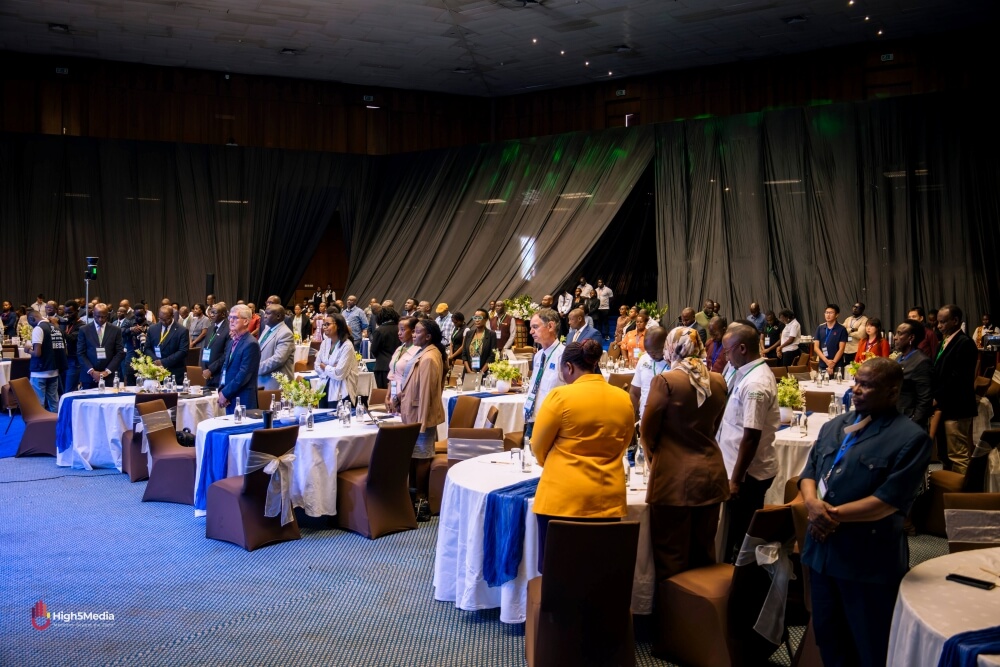
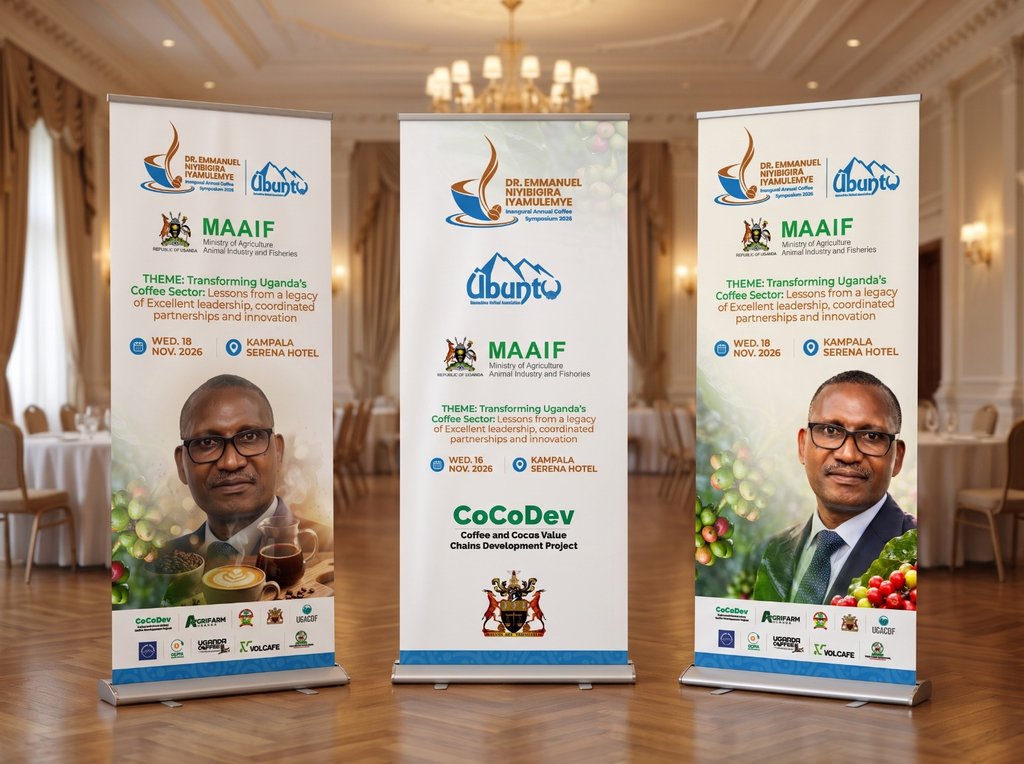
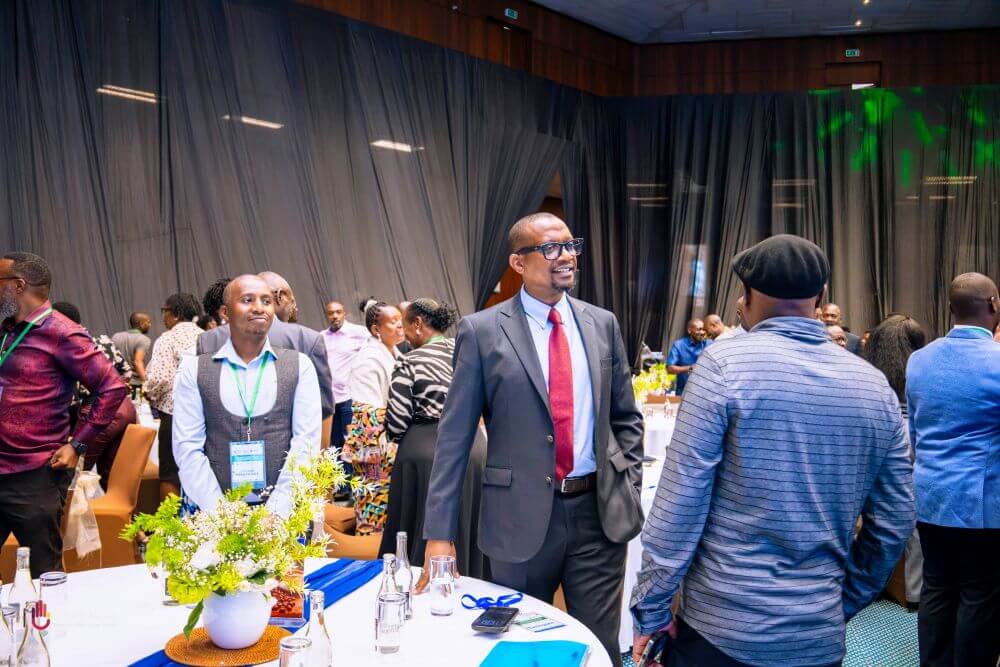
Therefore, in honor of his excellence and selfless service, the Bafumbira group, UBUA (Ubuntu Bafumbira United Association), designed and hosted the Dr. Emmanuel Niyibigira Iyamulemye Annual Coffee Symposium at Serena Hotel on 11th November 2026 in honor of his service. The conference was massive – hundreds attended, and the designated hall filled to the brim. Note that this is the first symposium, and it will be returning every after a year. Aren’t you excited already?
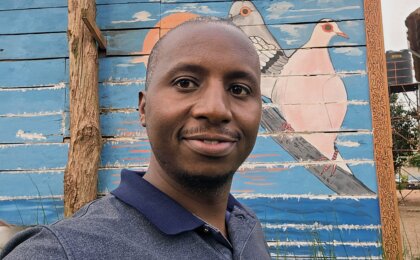
Well, on behalf of UBUA, Miklah Life, Bafumbira Beza, and our new coffee initiative, kazi coffee, I attended this great coffee symposium, and below are the take aways I managed to grasp:
Takeaways: Dr. Emmanuel Niyigibigira Iyamulemye Coffee Symposium
I. Dr. Iyamulemye worked with honor and humility.
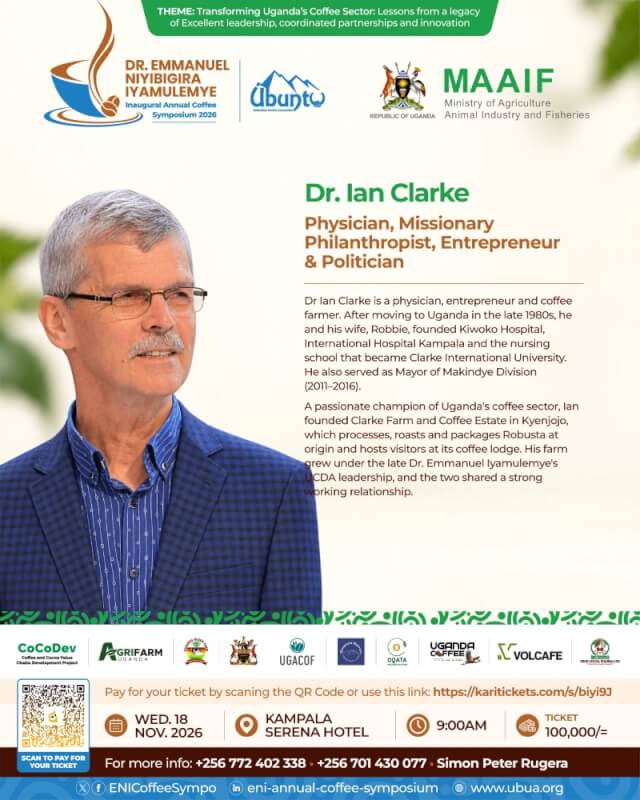
During the presentations, one of the speakers, Dr. Ian Clarke said that Dr. Emmanuel Niyibigira Iyamulemye ‘worked as if he was not a civil servant’. Given his excellence and the achievements the country has so far registered, Dr. Ian, being one of the biggest farmers of coffee and entrepreneurs in Uganda, must have experienced his impact firsthand. And in his honest view, Emmanuel Niyibigira Iyamulemye’s speed, concern, accountability, and humility were things not common with most Government workers, especially at the levels of authoritative positions in Government agencies. And thus, according to Ian, Dr. Iyamulemye worked and served as if he was not a civil servant! What a remark!
In my view, the remark instantly elevated Dr. Iyamulemye above most civil servants, while humbling most of us. What’s wrong with civil servants exactly? Why don’t we serve Ugandans with honesty, urgency, and resourcefulness? Why are you not responding to that email? Why not sign those papers on your desk? Why not open that Government portal and authorise those payments? Why are you not demanding for accountability from the schemes you wired billions of money to?
And why am I not posting this article at MiklahLife.com? Well, I just did! By the way, during the event, I tried to share updates as they came in. Check our Kazi Coffee handle for these updates.
II. Coffee is not just a crop; it is a livelihood.
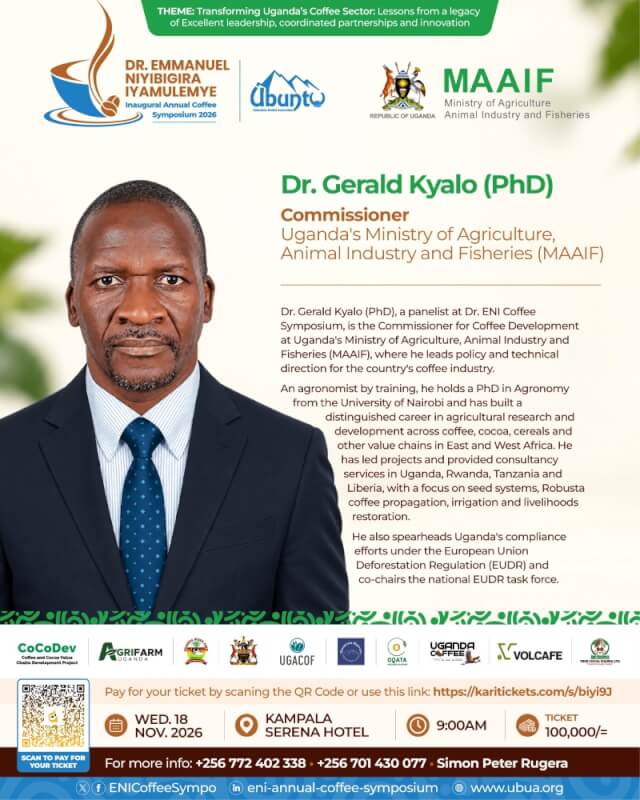
During the symposium, most presenters emphasized that coffee is not just a plant like any other, but a livelihood. They insisted that a single acre of land can pay school fees for children and provide for the basic welfare of a family if taken care of. In relation to this, representatives from the Ministry of Agriculture insisted that, for most farmers, they are suffering from low production.
According to the experts, one tree of coffee should produce 6-7 kilograms of red beans. Sadly, on most farms, each tree yields 1 kilogram. Most farmers suffer from lack of quality inputs, including fertilizers, good seeds, and agronomic services. Improving these aspects could triple the current yields even without necessarily enlarging our farms. At Kazi Coffee and ShareLand, we are looking into providing these inputs on a post-harvest payment model.
III. Coffee businesses and the best entry points for newcomers.
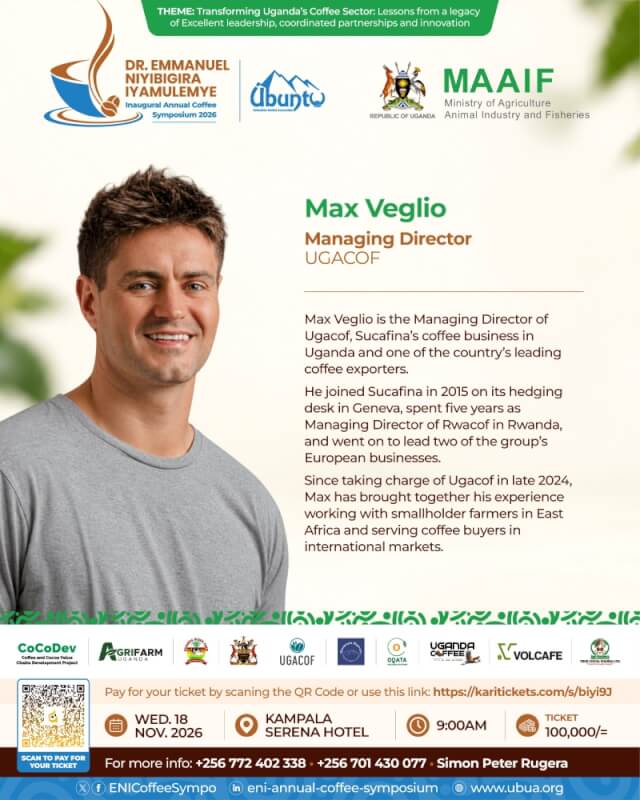
Max Veglio, the Managing Director at UGACOF, explored entrepreneurship aspects and coffee and concluded that, for most youth, retail business is one of the easiest. What does it mean? In this aspect, you do not grow coffee, nor harvest it. You cannot roast it, nor grind it. You cannot package it, not grade it. Nothing! However, you can actually buy everything from the already established dealers and pay for every stage until your packaged product is out, say, Kazi Coffee. This is affordable, for you could start small (even with, say, 200k-500k Ugx) and expand slowly by slowly.
Your job remains to then go around in supermarkets, shops, restaurants, and hotels, and ask if they would buy your coffee. If you get like 2 supermarkets, 2 hotels, and 3 other individuals, you are in business! I hope you already know this is the way we took as Kazi Coffee.
Max, however, noted that producing coffee to the final packaged product is costly, which makes the cost of the overall package expensive. Important to note is that when one is in retail, the clients are likely local. And local clients do not work well with high prices, even when the product is premium. Officers at the Ministry of Agriculture highlighted that they are prioritizing lowering the cost of production through mass availability of production machines and other services along the value chain. Max hinted on ‘setting up a coffee shop’, and he exclaimed; it is very expensive!
Coffee has other avenues: Growing coffee, broking coffee from growers to value addition companies, roasting business, coffee marketing and story-telling, coffee export, retailing and the like. Depending on an individual’s circumstances, entering the chain at a certain point might be more economically viable than the other. Evaluate your means.
In relation to this, Dr. Ian Clarke hinted on the complexities of exporting finished and packaged coffee, also called instant coffee (not beans). He said, for Ugandans to export finished and packaged coffee (the nescafe way), there is need for strong partnerships with companies of the places one wants to export to, so that production follows standards and quality is similar across products. It is challenging, he explained, but worth exploring.
IV. Partners, funding, and investment
The symposium organizers, led by Mr. Alex Rezida and James Mutabazi Kalorero, hinted on the idea of including awards and funding competitions in the next symposiums. This is promising. In terms of funding and finances, Edward Mugerwa at the Bank of Uganda, talked to us about available funds. However, in my view, there was surely nothing appetizing. What he talked of were special credits available for farmers and the like, but I did not even understand how an everyday person could access it. Besides, most young entrepreneurs are basically tired of loans.
I personally switch off whenever the talk is ‘favorable’ banks and loans. I do not believe in that. The only businessmen who should look there are those with successful ventures and they want to expand their operations. However, for young people who are not yet sure of their business models, loans are simply a trap!

However, I have recently noted Grow Project for women-led businesses. This is a game-changer. So, if your coffee business is woman-led, head over to the Grow Project website and apply. You could fetch 110 million Uganda shillings, completely free money. I have personally won funding opportunities in a different way, one with FAO and UNDP’s Youth4Climate and the other with the Arab Youth Center, Dubai. I strongly believe that funding is available from other sources if one’s startup is innovative enough and has clear business model. Explore opportunity tracker, funding for NGOs, Opportunities for Africans, and Opportunity Desk websites for funding opportunities. Join MIKLAH Sustainability Entrepreneurship Program for support.
V. Where is our coffee going?

According to representatives from Europe, specifically, the Ambassador of European Union, Jan Sadek, Europe purchases 70% of all our coffee exports. As such, in my view, Europe is a close ally in this matter. He insisted that European Union will continue with specific support for coffee sector and the ENI Coffee Symposium. Very promising. His words regarding Dr. Iyamulemye’s legacy were warm, re-assuring, and truly brotherly. Dr. Iyamulemye must have been a good person to do business with.
I did not hear about the United States statistics. However, some say it is roughly 5%, which is almost the same as our local consumption. There are markets in some Asian countries, China, and Latin America, but Uganda faces fierce competition across most of these areas, specifically from Brazil and Ethiopia. According to official statistics, Uganda exports about 16% of the coffee to African countries, mostly in the North Africa. Some of our buyers are Morocco, Egypt, Algeria, Sudan, Kenya, South Africa, and Madagascar.
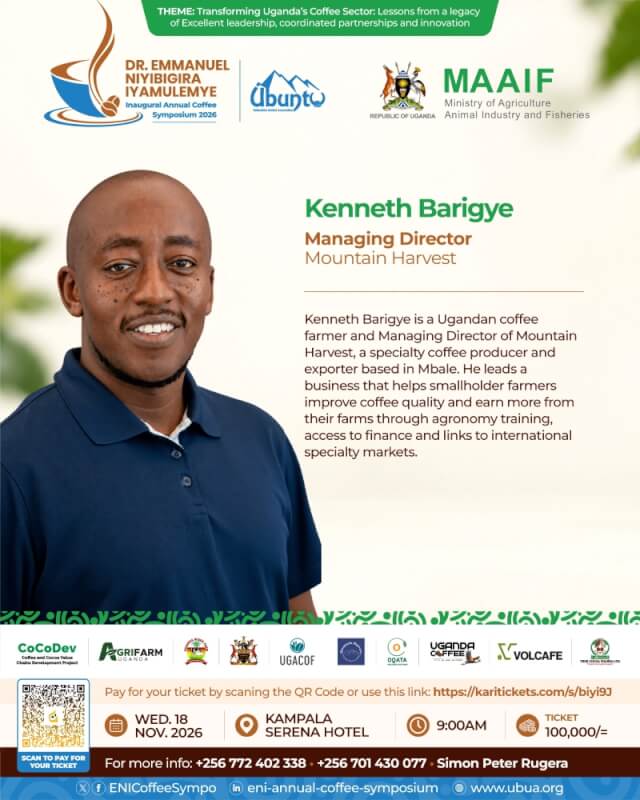
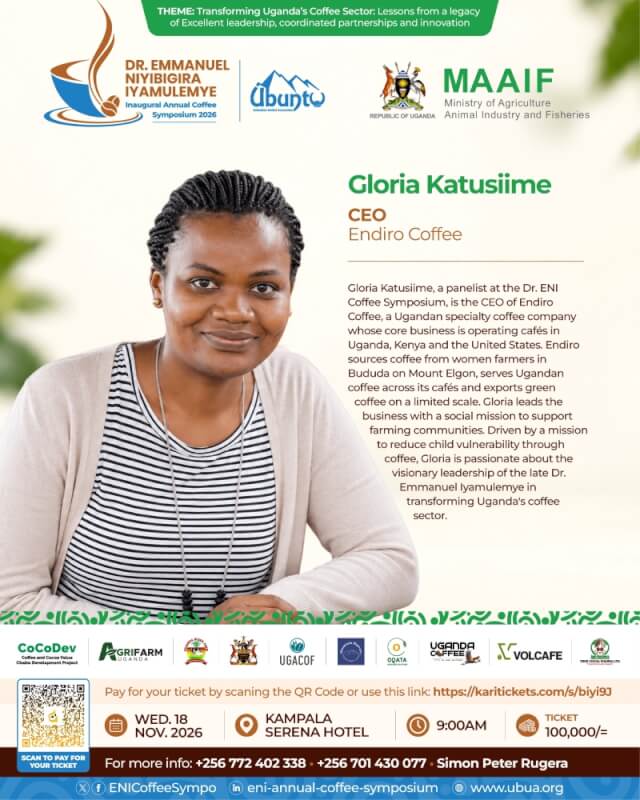
Concerning our local consumption, which is still low (not more than 7%), representatives from Endiro, Cafe Africa, Mount Harvest, and others insisted we need to invest more in coffee story telling. Citing Dr. Iyamulemye’s stand on intentional coffee stories, participants insisted that most Ugandans truly do not understand the value, quality, and uniqueness of Uganda’s coffee. Presenters cited how most Ugandans who get introduced to coffee start with the unpleasant instant coffees from other countries, which creates bias in them. Based on this, it is a duty of almost every coffee company to invest in coffee stories. I think we at Kazi Coffee are doing our best.
Wrap Up of Emmanuel Niyibigira Iyamulemye Symposium

The family of Dr. Emmanuel Niyibigira Iyamulemye, led by the wife, Madam Bridget Gihembo and the children was part of those that offered last remarks. According to the family, Dr. Iyamulemye was not only committed to public service, but also to his family. He was a family man. One of the children described him as a man who was present in someone’s life. ‘He loved details‘, the young man emphasized. He was very hardworking, honest, humble, and yet steadfast in his confidence. He would never succumb to compromises even when such integrity seemed costly on his part. That is the man we were celebrating.
In summary, Dr. Emmanuel Niyibigira Iyamulemye Inaugural Annual Coffee Symposium was a big success. Considering the fact that it was the first one of the many that will follow, it was well-organized, highly-attended (even our mayor, John King, was present) and very impactful.
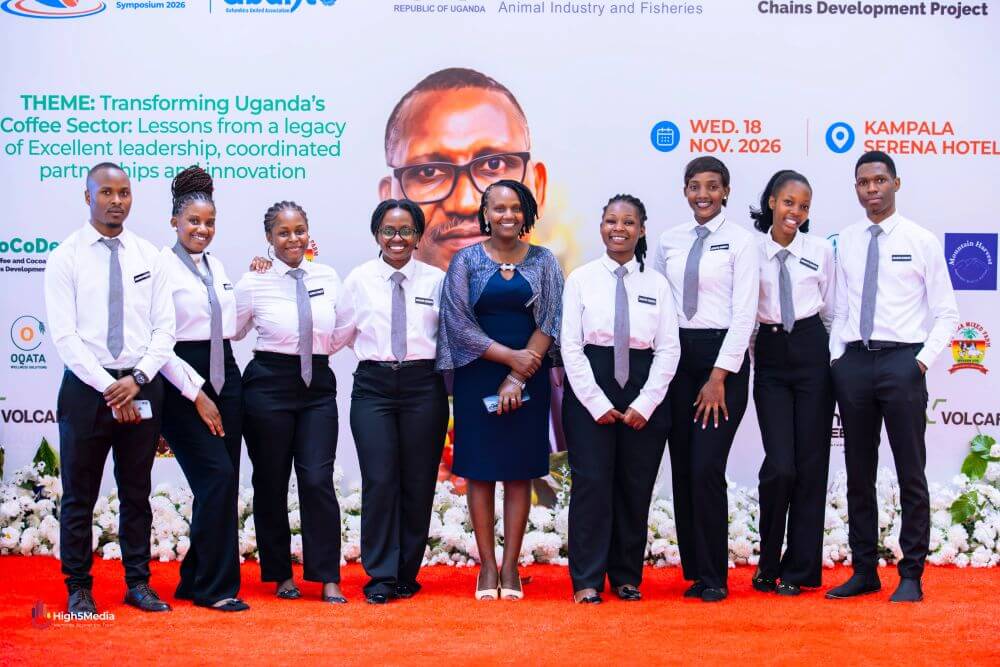
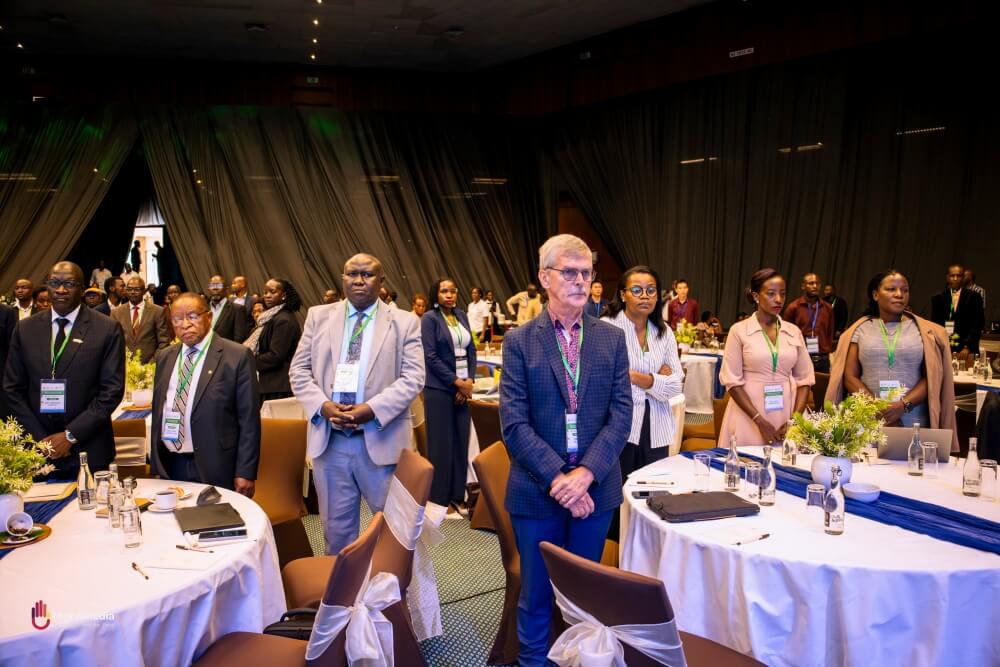
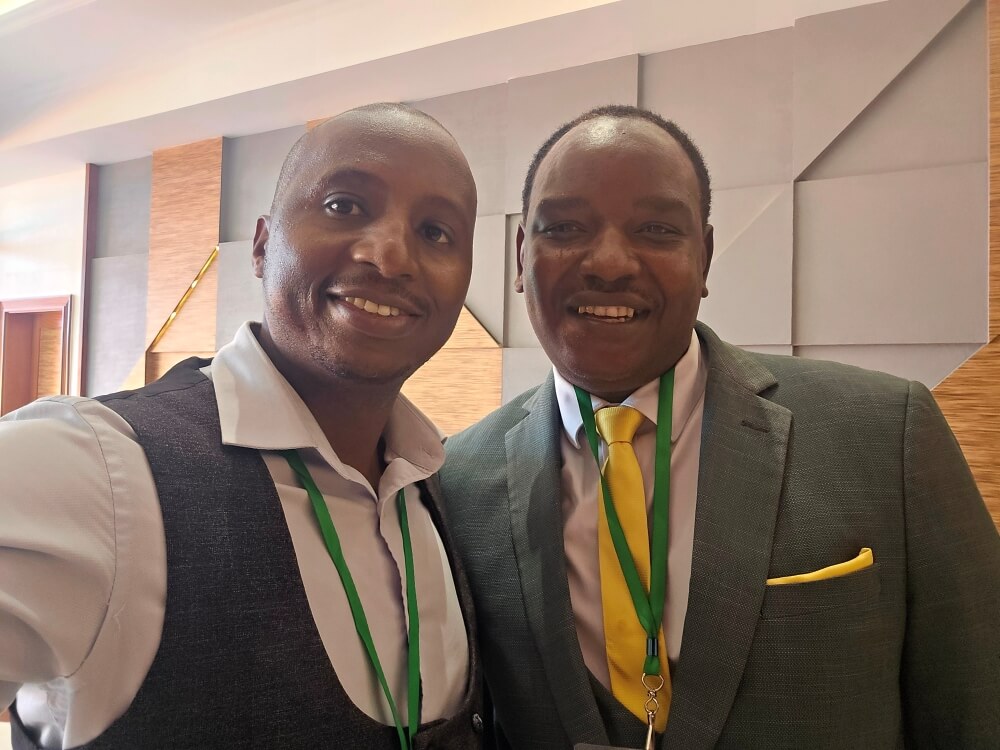
As a participant, I learnt a lot, connected more, and really felt inspired. I and Kazi Coffee and Miklah Life will always try and be there. I would like to send special thanks to Aunt Jolly from Ubuntu Bafumbira United Association (UBUA) and Jorge Carmona for sponsoring my attendance. God bless you all.